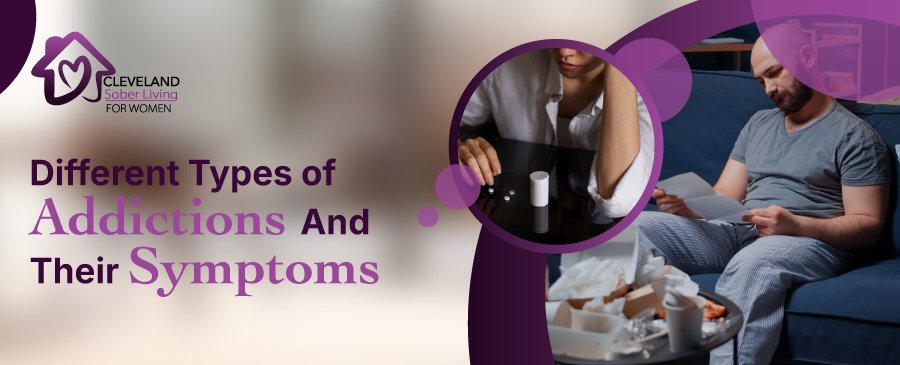
Different Types of Addictions And Their Symptoms
The condition of being addicted to a particular substance, thing, or activity is called addiction. From a medical point of view, it can be described as a chronic relapsing disorder involving a compulsion to seek and take drugs, despite the harm caused by those drugs, and brain changes that persist over time.
The most common types of addictions generally fall into two categories: substance use disorders and behavioral addictions. While each type affects people differently, all addictions can have a significant impact on physical health and mental well-being.
At Cleveland Sober Living for Women, we provide a safe, structured, and supportive environment where women can focus on healing from both substance use addiction as well as behavioral addictions. Through peer support, accountability, and guidance, women can create a strong foundation for lasting sobriety and a healthier future.
What is Substance Addiction?
Substance addiction happens when a substance changes the way the brain and body work. The body begins to depend upon the substance in order to feel normal after a while. This results in a strong craving and a vicious circle.
Examples of Substance addiction include:
- Alcohol Addiction
- Nicotine Addiction
- Opioid Addiction
- Methamphetamine Addiction (crystal meth, or ice)
- Benzodiazepine Addiction
- Cocaine Addiction
- Inhalant Addiction
- Prescription Drug Addiction
- Caffeine Addiction
- Cannabis Addiction
Main Symptoms of Substance Addiction
Substance use disorders have a significant impact to overall physical health. Symptoms will differ depending on the substance being consumed but a few warning signs are common.
1. Insomnia
Insomnia is defined as a lack of sleep or waking up during the night. Abusing any substance can affect a person’s sleep and result in waking up tired, restless and exhausted during the day.
2. Decreased Short-Term Memory
A lot of drugs and addictive substances have negative effects on a person’s memory including ability to store and recall recent information. Consequently, someone can often lose track of things to happen, meetings arranged or daily activities performed.
3. Lung Infections
Smoking or inhaling certain substances can damage the lungs and weaken the respiratory system. This makes them more susceptible to infections like bronchitis, pneumonia and respiratory tract infections.
4. Depression
Depression is a prolonged state of sadness, hopelessness, or lack of interest in activities that are usually fun. These feelings can become more intense with substance use and become more difficult to handle emotions and daily tasks.
5. Anxiety
Anxiety is defined as an abnormal nervousness or fear that may interfere with one’s daily life. Increased anxiety occurs often with substance use or withdrawal, making it hard to relax or focus.
6. Hypertension
Hypertension, or high blood pressure, in humans happens once the blood pressure is continually elevated against the wall of the arteries. Some substances may put strain on the cardiovascular system, and lead to cardiovascular complications.
7. Experiencing Euphoria
A state of great delight, excitement or good health caused temporarily by some substance. This can be fun initially but can also perpetuate addiction.
8. Mood Swings
Addicts may have mood swings that are instant and unexpected. They can be joyful or active, and then irritable or angry, or emotionally distressed.
9. Changes in Appetite and Weight
Substance use can significantly affect eating habits, causing a person to eat much more or much less than usual. Over time, these changes can lead to noticeable weight gain or weight loss and impact overall health.
Behavioral Addiction
Behavioral addiction is when a person feels unable to stop doing a certain activity, even when it causes problems in their life.
Examples of some common behavioral addictions include:
- Gambling Addiction
- Porn Addiction
- Sex Addiction
- Food addiction
- Work addiction
- Gaming addiction
- Social Media Addiction
Main Symptoms of Behavioral Addictions
Behavioral addictions can affect more than just daily habits they can also influence emotions, relationships, and overall well-being. While symptoms vary from person to person, there are several common warning signs that may indicate an unhealthy dependence on a particular behavior.
1. Impulsivity
Impulsivity refers to acting without thinking about the consequences. Those who suffer from behavioral addictions might find that they cannot control their urges, despite understanding that they may inflict damage upon themselves.
2. Aggressive Behavior
Aggression can express as extremes of behavior anger, hostility or emotional eruption at others. These emotional reactions often happen when they feel stressed, frustrated, or unable to engage in the activity they have become dependent on.
3. Rules Violation
The person may lose control of restrictions, rules, responsibilities given by family, school, work, etc. They tend to focus on the addiction rather than expectations and responsibilities.
4. Frequent Mood Swings
Emotions can also change quickly, from excitement and happiness to sadness, irritability or frustration, with behavioral addictions. These transitions are frequently due to restricted or unlimited access to or from the consumption of the addictive substance.
5. Social Withdrawal
An individual might start separating from friends and family, as well as activities they used to participate in. As time goes on, the addictive behavior starts outweigh all actions necessary to maintaining positive relationships.
6. Defiance of Authority
Defying authority is when a child refuses rules, advice or instructions from parents, teachers, employer or another authority. This can be due to a craving to keep the addictive behavior going without change.
7. Low Frustration Tolerance
Another symptom of people with behavioral addiction is that they cannot control their frustration, if things don’t go the way they want, they easily get angry.
8. Poor Academic or Occupational Performance
Performance at school or work may begin to decline as the addict needs more time and attention. Examples of warning signs include missed deadlines, decreased production and concentration.
9. Panic Attacks
A panic attack is a sudden and extreme spike in fear or anxiety at any time. These can trigger a fast heartbeat, difficulty in breathing, increased perspiration, a sense of being unsteady, and feelings of losing control.
Which condition is often a result of alcohol addiction?
Substance Use Disorders are most commonly associated with alcohol addiction including fatty liver disease, alcoholic hepatitis and cirrhosis.
Frequently Asked Questions
Lorem ipsum dolor sit amet, consectetuer adipiscing elit. Aenean commodo ligula eget dolor. Aenean massa. Cum sociis natoque penatibus et magnis dis parturient montes, nascetur ridiculus mus. Donec quam felis, ultricies nec, pellentesque eu, pretium quis, sem. Nulla consequat massa quis enim. Donec pede justo, fringilla vel, aliquet nec, vulputate eget, arcu.
Lorem ipsum dolor sit amet, consectetuer adipiscing elit. Aenean commodo ligula eget dolor. Aenean massa. Cum sociis natoque penatibus et magnis dis parturient montes, nascetur ridiculus mus. Donec quam felis, ultricies nec, pellentesque eu, pretium quis, sem. Nulla consequat massa quis enim. Donec pede justo, fringilla vel, aliquet nec, vulputate eget, arcu.
Lorem ipsum dolor sit amet, consectetuer adipiscing elit. Aenean commodo ligula eget dolor. Aenean massa. Cum sociis natoque penatibus et magnis dis parturient montes, nascetur ridiculus mus. Donec quam felis, ultricies nec, pellentesque eu, pretium quis, sem. Nulla consequat massa quis enim. Donec pede justo, fringilla vel, aliquet nec, vulputate eget, arcu.
Your Life
Belongs to You
Schedule Your Consultation
Our Latest
Blogs