

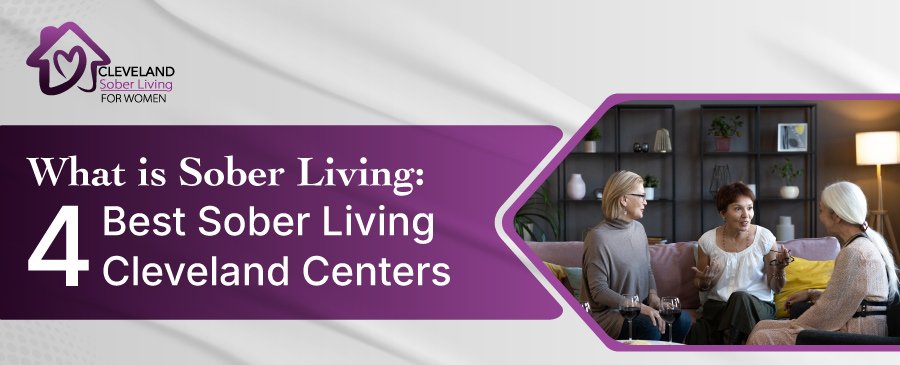
What is Sober Living: 4 Best Sober Living Cleveland Centers
For people recovering from alcohol or drug addiction, sober living is a housing arrangement that supports you during your abstinence period. It sits between formal inpatient treatment and fully independent life. Residents live together in a substance-free home, follow house rules, support one another, and gradually rebuild daily routines without any pressure.
It is not the same as rehab. There are no locked doors or round-the-clock clinical supervision. Instead, sober living offers structured freedom.
Sober living is particularly helpful for people who:
- Have no safe or sober home to return to
- Are rebuilding employment, finances, or family relationships
- Need peer accountability to stay on track
- Want continued access to 12-step meetings and recovery support
What Does the Research Say About Sober Living?
Researchers documented measurable improvement across sober living residents in alcohol and drug use, employment, arrests, and psychiatric symptoms. A peer-reviewed study published in the Journal of Psychoactive Drugs followed 300 individuals entering sober living houses for 6 months to 12 and 18 months. While the initial 6 months abstinence recorded the highest percentage of 11% at baseline to 68%, the 18 months abstinence also touched 46%.
Not Just Addiction – Your Mental Health Signals Are Also Important:
Addiction and mental health rarely travel alone. Many people in recovery are also managing co-occurring psychological conditions that make independent living feel impossible.
If you or someone you love is experiencing any of the following, a sober living program may be the right next step:
- Depression or persistent low mood that worsens without structure or social connection
- Anxiety disorders, including social anxiety that makes re-entry into daily life feel overwhelming
- PTSD or trauma responses triggered by returning to a previous home environment
- Bipolar disorder requiring daily routine and monitoring to stay stable
- Co-occurring substance use and mental health disorders (dual diagnosis), where both conditions need simultaneous attention
- Emotional dysregulation or difficulty managing stress without substances
- Isolation and social withdrawal that increase relapse risk
Sober living provides a consistent, monitored environment. For people managing MENTAL HEALTH challenges alongside addiction, that consistency is often the difference between sustained sobriety and relapse.
Did you know?
Destructive living environments can derail recovery. If your loved one has completed their medication, a sober living house may be their next stop to get used to sobriety with ease.
The Top 5 Sober Living Centers in Ohio
| # | Center | Location | Highlights |
|---|---|---|---|
| 1 | Cleveland Sober Living for Women | Cleveland, OH | Women-only, not just sobriety they provide life-skills mentoring, vocational & academic support |
| 2 | Stella Maris Cleveland | Cleveland, OH | Oldest provider in Cleveland (est. 1948), 446-bed recovery housing network |
| 3 | Recovery Institute of Ohio | Sandusky, OH | Dual diagnosis, full continuum of care, 12-step integrated |
| 4 | Aware Recovery Care | Statewide, OH | In-home addiction treatment, flexible outpatient hybrid model |
| 5 | Jeff's Sober Living | Ohio | Peer-led community-based sober housing for men and women |
1. Cleveland Sober Living for Women — Best Overall for Women in Cleveland
Website: clevelandsoberlivingforwomen.com Location: 1300 East 9th Street, Cleveland, Ohio 44114 Contact: (440) 570-6507
Cleveland Sober Living for Women stands apart from every other option on this list. It is not simply a place to stay sober — it is a place to build a new life.
The program provides a safe, comfortable, and structured atmosphere for women in early recovery. The sober living program includes continued monitoring of sobriety success, and transportation of residents to all meetings, work or school responsibilities, and social events. The purpose is to provide an environment of accountability and the retraining of new life skills for success in sobriety.
What makes this women’s sober living program exceptional:
Sobriety monitoring and peer support. Residents are held accountable through ongoing sobriety checks and weekly in-house support gatherings. Peer encouragement and accountability from women on the same path is built into daily life. No one recovers alone here.
Life-Skills Mentoring. This is where Cleveland Sober Living for Women truly goes beyond. The program does not just help residents get sober — it helps them figure out what comes next. Staff provide one-on-one guidance with:
- Writing and polishing résumés
- Signing up for academic classes and vocational programs
- Identifying career paths and educational opportunities each resident may not have known were within reach
- Providing transportation to put those new aspirations into reality
Extended stays are available for women who need more time before transitioning to independent sober living. There is no pressure to move on before a resident is truly ready.
Who is this for? Any woman in early recovery who wants more than just a drug-free room. This is for the woman who wants to get sober and then get moving — toward a career, a degree, or simply a life she is proud of.
2. Stella Maris Cleveland
Website: http://stellamariscleveland.com/ Location: 1320 Washington Avenue, Cleveland, Ohio 44113
Stella Maris is the oldest addiction treatment provider in Cleveland, offering a variety of programs for different stages of recovery, including detox, residential treatment, partial hospitalization, and intensive outpatient programs. Each program incorporates trauma-informed care with individual and group counseling.
Stella Maris administers the Cuyahoga County ADAMHS Board-funded Recovery Housing Network, which connects 41 houses with 446 beds across 23 providers, linking clients with recovery services and stable, sober housing.
Patients have access to a Workforce Development program with hands-on job training in the kitchen or coffee shop, developing practical employment skills like customer service and time management. For those managing both addiction and mental health conditions, Stella Maris offers co-occurring disorder treatment using evidence-based therapies to work through trauma and healthier stress management.
3. Recovery Institute of Ohio
Website: recoveryinstituteofohio.com Location: 1019 Pierce St. Sandusky, OH 44870
Recovery Institute of Ohio offers a full spectrum of care, from medical detox through to sober living. They provide sober living accommodations for individuals who need a safe place to stay while undergoing treatment, and those with dual diagnosis receive mental health treatment and addiction treatment concurrently.
Their sober living options give clients a supportive, sober home while they transition back to the real world. Sober living encourages a phased approach to recovery, moderately increasing exposure to potential triggers rather than an abrupt return to a former environment. Access to 12-step meetings is built into the program.
4. Aware Recovery Care
Website: awarerecoverycare.com Location in Ohio: 216.200.4415
Aware Recovery Care takes a different approach entirely — bringing the sober living program to you. Their In-Home Addiction Treatment (IHAT) program provides a hybrid combination of at-home and virtual care with concierge services. It addresses addiction with a biopsychosocial curriculum containing evidence-based therapies, medication-assisted treatment, individual therapy, family therapy, and coordinated care from external providers.
Sober living through Aware Recovery Care leads to improved physical and mental health, sharper decision-making, greater emotional resilience, stronger relationships, and better financial wellbeing. For those who cannot or do not want to leave their home environment, this is a flexible and private alternative worth serious consideration.
How Women's Sober Living Programs Are Changing Lives
Women face recovery differently. Trauma, childcare responsibilities, economic dependence, and social stigma all create barriers that a one-size-fits-all approach simply does not address.
A women’s sober living program provides a gender-specific space where these realities are understood and accounted for. Women can speak openly without filtering their experiences. They can form bonds with others who have faced similar circumstances.
But the best women’s sober living programs go further than sobriety alone. They ask: what does a good life look like for this woman, and how do we help her get there?
That is exactly what Cleveland Sober Living for Women has built. Many women arrive having lost time — to addiction, to difficult relationships, to circumstances that put careers and education on hold. The program does not treat that lost time as a dead end. Instead, staff work with each resident to uncover what she is capable of and map out a real plan to get there.
This means sitting down together to write a résumé, identifying academic programs she may qualify for, signing up for classes, and making sure she actually gets there — literally, through transportation support. It means showing a woman that the version of her life she had imagined is still possible.
Families and staff acknowledge the program’s commitment to helping young women in early recovery achieve essential aspects of their lives — family relationships, trust, career goals, education, and financial independence.
Sobriety is the starting line. A women’s sober living program at its best makes sure women know there is a race worth running on the other side of it.
Final Thoughts
Whether you are a woman looking for a program that will walk alongside you into a new career and a new identity, or someone who needs the structured support of a long-established clinical network, there is an option on this list for you.
The right environment does not just keep you sober — it gives you the foundation to rebuild everything addiction took away.
Disclaimer: This article is for informational purposes only and does not substitute for professional medical advice, diagnosis, or treatment. Always consult a qualified healthcare provider or addiction specialist regarding mental health and recovery plans.
Your Life
Belongs to You
Schedule Your Consultation
Our Latest
Blogs