

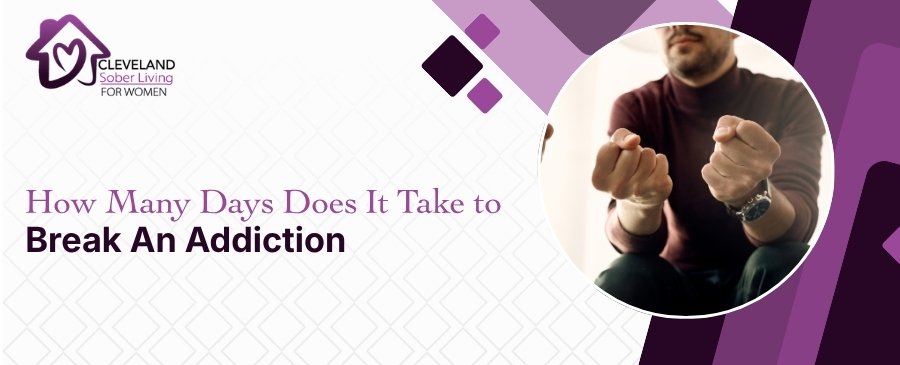
How Many Days Does It Take to Break an Addiction?
Addiction is what happens when a person’s need for a substance or behavior becomes so powerful that it overrides everything else: their health, their relationships, their sense of self. And here’s what’s important to understand from the start — it has nothing to do with weakness or poor character. And the answer to ‘how many days does it take to break an addiction’, varies.
Ever tried to stop something and couldn’t, no matter how much you wanted to? This is the easiest definition of addiction which is not found in books.
The brain regions that govern pleasure, stress response, and impulse control get rewired over time. The technical term ‘substance use disorder’, or ‘SUD’, sits on a spectrum.
Two or three symptoms might indicate a mild disorder. Six or more points to severe addiction. But wherever someone falls on that spectrum, what they’re experiencing is real, and it deserves real support.
Types of Addiction and How Long Each Takes to Break
Addiction doesn’t look the same for everyone, and it doesn’t follow the same timelines. The addiction, duration of it, and how an individual’s brain has adapted it, all determines their recovery spans. Some addictions and time durations they usually require to break:
Nicotine (8 to 12 weeks):
Nicotine leaves the body relatively quickly, which is why many people underestimate this one. But the psychological grip — the ritual, the reach for a cigarette under stress — can linger for months after the body is physically clear.
Alcohol (3 to 6 months):
The body takes about a week to detox. Physical withdrawal typically peaks within two weeks. But breaking the full cycle — the emotional reliance, the habitual patterns, the social triggers — takes most people three to six months. One important note: alcohol withdrawal can be medically dangerous. It should never be done alone.
Opioids (4 to 10 days):
Withdrawal can begin within hours of the last dose and is often intensely physical. And the cravings and emotional hollowness takes much longer to work through. Furthermore, acute withdrawals can take months as well.
Other Substances (6 to 12 months):
Cocaine, meth, benzodiazepines, cannabis — each has its own withdrawal profile and its own timeline. As a general benchmark, structured treatment for substance addiction typically runs 6 to 12 months.
Gambling (months to years):
There’s no physical detox with gambling, but don’t let that fool you. The psychological wiring is just as deep. Recovery usually involves long-term therapy to untangle the thought patterns that drove the behavior.
Screen and Social media (weeks to months):
This one is newer but increasingly recognized as a genuine behavioral addiction. The notification-dopamine loop is a real mechanism, and breaking it takes good effort. However, recovery is a lot faster compared to substance addiction.
Add Your Heading Text Here
Lorem ipsum dolor sit amet, consectetur adipiscing elit. Ut elit tellus, luctus nec ullamcorper mattis, pulvinar dapibus leo.
Did you know?
The 21-day rule comes from a 1960s book by a plastic surgeon observing how long patients took to adjust to physical changes after surgery. It was never about addiction. Actual research puts habit change at around 66 days on average, and for addiction, 90 days is widely considered the minimum before meaningfully healing.
Ready to reclaim?
Cleveland Sober Living for Women offers compassionate and structured recovery support for women in Ohio.
Can Occasional Habits Lead to Addiction?
The short answer is a ‘yes’. Addiction isn’t a fixed point. The longer someone uses, the more the brain adapts. This cycle builds tolerance, resulting in your brain signaling you for more substance or a specific action / set of actions, to feel the same effect. Hence, deepening the dependency.
It often starts with “just once” or “just on weekends.” Addiction almost always begins with occasional use, e.g., a drink at a party, a prescription taken a little longer than needed, a harmless bet.
4 Stages of Addiction
Developed in stages, addiction may be broken in 4 stages according to GoodRx, and one of the most important things to understand is that control doesn’t vanish all at once. It erodes gradually, thus an early pull back is easier:
Stage 1: Commonly known as an experimentation phase, this is where almost every addiction begins. Curiosity, a social situation, a moment of stress can all be the first stage of addiction.
Stage 2: This is the regular user stage. A person may be following a specific pattern, maybe every weekend, or every time stress hits a certain level. Most people still believe they’re in control, and they mostly are. However, what they don’t realize is the tolerance which is building up quietly.
Stage 3: This is where things shift in a tangible way. Use continues despite clear consequences — relationships fraying, health declining, work suffering. The body has adapted physically; stopping now means withdrawal. The substance has gone from something wanted to something needed. Willpower alone isn’t enough here. Medical support becomes necessary.
Stage 4: Full addiction – at this stage, the person is both physically and psychologically dependent. They may desperately want to stop and find themselves unable to. The substance can feel like it’s running their life. This stage is the hardest but recovery is still absolutely possible.
Does the Stage of Addiction Affect How Long Recovery Takes?
Yes. The earlier treatment begins, the less ground there is to cover. Here’s a general picture:
| Stage | Estimated Recovery Duration | What's Needed |
|---|---|---|
| Experimentation | Days to a few weeks | Awareness, motivation, environment change |
| Regular Use | Weeks to 3 months | Behavioral support, counseling, accountability |
| Dependence | 3 to 12 months | Medical detox, outpatient or inpatient programs, therapy |
| Full Addiction | 1 to 5+ years (ongoing) | Residential treatment, medication-assisted therapy, long-term counseling, community support |
Furthermore, the 90-day mark matters because that’s when research shows the brain beginning to genuinely reverse the changes addiction created.
Can Addictions Be Completely Treated?
This is the question most people are really asking, and it deserves a straight answer.
Addiction can absolutely be treated. People can recover fully, sustainably, and permanently in many cases. But most addiction medicine specialists are careful with the word “cured,” because the honest picture is more nuanced. Addiction is better understood as a chronic condition, like diabetes or high blood pressure, conditions that require ongoing management and not a single fix.
Frequently Asked Questions
Lorem ipsum dolor sit amet, consectetuer adipiscing elit. Aenean commodo ligula eget dolor. Aenean massa. Cum sociis natoque penatibus et magnis dis parturient montes, nascetur ridiculus mus. Donec quam felis, ultricies nec, pellentesque eu, pretium quis, sem. Nulla consequat massa quis enim. Donec pede justo, fringilla vel, aliquet nec, vulputate eget, arcu.
Lorem ipsum dolor sit amet, consectetuer adipiscing elit. Aenean commodo ligula eget dolor. Aenean massa. Cum sociis natoque penatibus et magnis dis parturient montes, nascetur ridiculus mus. Donec quam felis, ultricies nec, pellentesque eu, pretium quis, sem. Nulla consequat massa quis enim. Donec pede justo, fringilla vel, aliquet nec, vulputate eget, arcu.
Lorem ipsum dolor sit amet, consectetuer adipiscing elit. Aenean commodo ligula eget dolor. Aenean massa. Cum sociis natoque penatibus et magnis dis parturient montes, nascetur ridiculus mus. Donec quam felis, ultricies nec, pellentesque eu, pretium quis, sem. Nulla consequat massa quis enim. Donec pede justo, fringilla vel, aliquet nec, vulputate eget, arcu.
Your Life
Belongs to You
Schedule Your Consultation
Our Latest
Blogs